In the bustling world of salon business, the significance of a well - functioning salon chair cannot be overstated. A key aspect of these chairs is their height adjustment feature, which is crucial for both the comfort of the stylist and the client. As a seasoned Salon Chair Gas Spring supplier, I've witnessed firsthand how pressure plays a pivotal role in this height - adjustment mechanism.
Understanding the Basics of Salon Chair Gas Springs
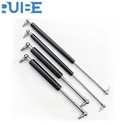
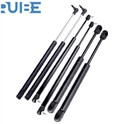
Before delving into the relationship between pressure and height adjustment, it's essential to understand what a gas spring is. A gas spring is a type of mechanical device that uses compressed gas, typically nitrogen, to provide a smooth and controlled motion. In the context of a salon chair, the gas spring is the component that allows the chair to be raised or lowered with relative ease.
The basic structure of a salon chair gas spring consists of a cylinder filled with gas, a piston rod, and a valve. When force is applied to the piston rod, the gas inside the cylinder is compressed, and the pressure within the cylinder changes. This change in pressure is what enables the chair to move up or down.
The Role of Pressure in Height Adjustment
Compression and Expansion
The fundamental principle behind the height adjustment of a salon chair is the compression and expansion of the gas inside the gas spring. When a stylist wants to lower the chair, they release a lever or a button that allows the gas spring to expand. As the gas expands, the pressure inside the cylinder decreases, and the piston rod moves out of the cylinder, causing the chair to lower.
Conversely, when the stylist wants to raise the chair, they apply force to the chair, which compresses the gas inside the cylinder. The pressure increases, and the piston rod is pushed back into the cylinder, raising the chair to the desired height.
Pressure - Force Equilibrium
For the height adjustment to work smoothly, there needs to be a balance between the pressure inside the gas spring and the external force applied. If the pressure inside the gas spring is too low, the chair may not be able to support the weight of the stylist or the client, and it may sink to the lowest position. On the other hand, if the pressure is too high, it may be difficult to lower the chair, and the stylist may have to apply excessive force.
Factors Affecting Pressure in Gas Springs
Temperature
Temperature has a significant impact on the pressure inside a gas spring. According to the ideal gas law, PV = nRT, where P is pressure, V is volume, n is the number of moles of gas, R is the ideal gas constant, and T is temperature. As the temperature increases, the pressure inside the gas spring also increases, assuming the volume and the amount of gas remain constant.
In a salon environment, the temperature can vary throughout the day. For example, if the salon is located in a sunny area or if there are a lot of people in the salon, the temperature may rise. This increase in temperature can cause the pressure inside the gas spring to increase, making it more difficult to lower the chair.


Gas Leakage
Over time, gas springs may develop small leaks. Even a minor leak can cause a gradual decrease in the pressure inside the cylinder. As the pressure decreases, the chair may start to lose its ability to maintain a stable height. It may slowly sink over time, or it may not be able to support the weight properly.
Wear and Tear
The constant compression and expansion of the gas spring during normal use can cause wear and tear on the components. The seals around the piston rod may start to deteriorate, allowing gas to escape. This can lead to a decrease in pressure and affect the height - adjustment performance of the chair.
Ensuring Optimal Pressure for Height Adjustment
Regular Maintenance
As a Salon Chair Gas Spring supplier, I always recommend regular maintenance of the gas springs. This includes checking for any signs of gas leakage, inspecting the seals, and lubricating the moving parts. By performing these maintenance tasks, salon owners can ensure that the gas springs are in good condition and that the pressure remains stable.
Quality Gas Springs
Investing in high - quality gas springs is crucial. High - quality gas springs are designed to withstand the rigors of daily use in a salon environment. They are made with better materials and have more precise manufacturing tolerances, which helps to maintain the pressure and ensure smooth height adjustment.
Other Applications of Gas Springs
Gas springs are not only used in salon chairs but also in a variety of other applications. For example, Sofa Gas Spring is used in sofas to provide smooth reclining motion. The pressure in these gas springs is carefully calibrated to ensure that the sofa can be adjusted easily and can support the weight of the user.
Another application is Gas Spring for Garden Chair. These gas springs are designed to withstand outdoor conditions, such as temperature variations and exposure to moisture. They allow garden chairs to be adjusted to different heights and angles, providing comfort to the users.
Lockable Gas Spring for Table is also a popular application. These gas springs are used to adjust the height of tables, making them suitable for different tasks and user preferences.
Conclusion
In conclusion, pressure is a critical factor in the height adjustment of a salon chair. Understanding how pressure affects the compression and expansion of the gas spring is essential for ensuring the smooth operation of the chair. By considering factors such as temperature, gas leakage, and wear and tear, salon owners can take steps to maintain the optimal pressure in the gas springs.
As a Salon Chair Gas Spring supplier, I am committed to providing high - quality gas springs that are designed to meet the specific needs of the salon industry. If you are in the market for salon chair gas springs or have any questions about pressure and height adjustment, I encourage you to reach out for a procurement discussion. We can work together to find the best solutions for your salon chairs.
References
- "Engineering Mechanics: Statics and Dynamics" by Russell C. Hibbeler.
- "Fluid Mechanics" by Frank M. White.
- Industry reports on gas spring technology and applications.