Hey there! As a supplier of 12V linear actuators, I often get asked about the accuracy of these nifty devices. So, I thought I'd take a deep dive into this topic and share some insights with you.
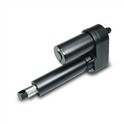
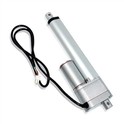
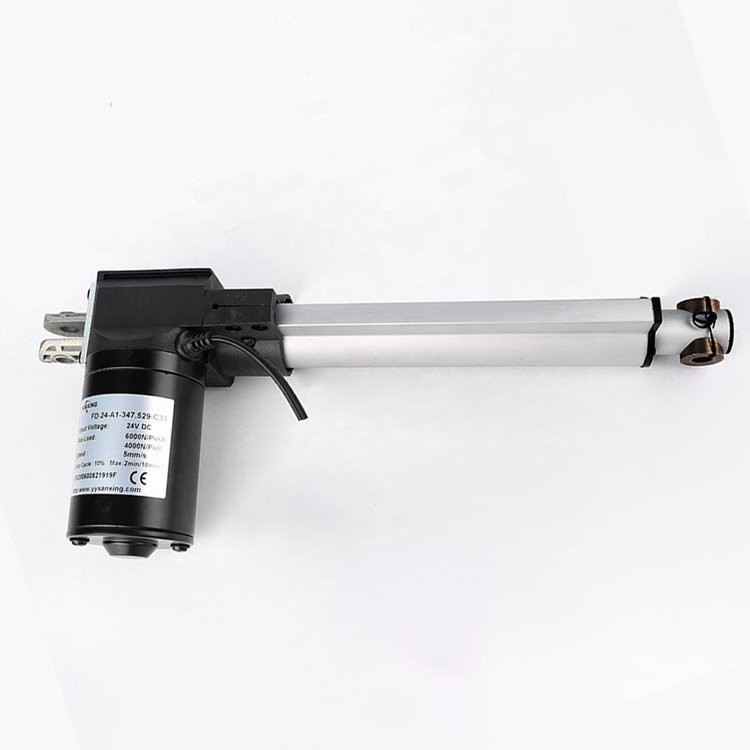
First off, let's understand what a 12V linear actuator is. It's a device that converts rotational motion into linear motion using a 12 - volt power source. These actuators are super versatile and can be found in a wide range of applications, from Linear Actuator for Door Opener to Linear Actuator for Solar Tracker and Linear Actuator for Trunk Lid.
Now, let's talk about accuracy. When we say accuracy in the context of a 12V linear actuator, we're mainly referring to how precisely it can move to a specific position and how repeatable that movement is. There are a few factors that can affect the accuracy of a 12V linear actuator, and I'll break them down for you.
Motor Quality
The motor is the heart of the linear actuator. A high - quality motor will have better control over its rotational speed and torque. Motors with high precision and low backlash are crucial for accurate linear movement. Backlash is the play or free movement in the motor's gears or drive mechanism. If there's a lot of backlash, the actuator might move a bit more or less than intended, reducing its accuracy. For example, in a Linear Actuator for Solar Tracker, low - backlash motors are essential to ensure that the solar panels are always pointed directly at the sun for maximum energy absorption.

Control System
The control system of the actuator plays a huge role in its accuracy. Most 12V linear actuators can be controlled using various methods, such as potentiometers, limit switches, or more advanced feedback systems like encoders.
- Potentiometers: These are simple devices that can provide a variable resistance based on the position of the actuator. By measuring this resistance, the control system can estimate the position of the actuator. However, potentiometers are not the most accurate method as they can be affected by wear and tear over time, and their accuracy can be limited.
- Limit Switches: Limit switches are used to define the end - points of the actuator's movement. They are great for setting basic limits, but they don't provide continuous position feedback. So, if you need to position the actuator at a specific point between the end - points, limit switches won't be enough.
- Encoders: Encoders are the most accurate way to control the position of a 12V linear actuator. They can provide real - time feedback on the motor's rotation, allowing the control system to precisely calculate the position of the actuator. Encoders are commonly used in applications where high accuracy is required, such as in robotics or some high - end Linear Actuator for Door Opener systems.
Load and Friction
The load that the actuator has to move and the friction in the system also impact its accuracy. If the load is too heavy or if there's a lot of friction in the actuator's mechanism, it can cause the actuator to move slower or with less precision. For instance, in a Linear Actuator for Trunk Lid, if the trunk is filled with heavy items, the actuator might struggle to open or close the lid smoothly and accurately.
Environmental Conditions
Environmental factors like temperature, humidity, and dust can also affect the accuracy of a 12V linear actuator. Extreme temperatures can cause the materials in the actuator to expand or contract, which can change the dimensions of the components and affect the movement accuracy. High humidity can lead to corrosion, and dust can get into the actuator's mechanism and increase friction.
Measuring Accuracy
To measure the accuracy of a 12V linear actuator, we usually look at two main parameters: positional accuracy and repeatability.
- Positional Accuracy: This is the difference between the desired position and the actual position of the actuator. It's usually measured in millimeters or inches. For example, if you tell the actuator to move to a position 100mm from its starting point, and it actually stops at 101mm, the positional accuracy is 1mm.
- Repeatability: Repeatability refers to how consistently the actuator can move to the same position over multiple cycles. If an actuator has high repeatability, it means that every time you tell it to move to a specific position, it will get very close to that position. A good 12V linear actuator should have a high degree of repeatability, especially in applications where the same movement needs to be performed over and over again, like in a manufacturing process.
Improving Accuracy
If you're looking to improve the accuracy of a 12V linear actuator, here are some tips:
- Choose the Right Actuator: Make sure to select an actuator that is rated for the load and the level of accuracy you need. If you need high accuracy, consider an actuator with an encoder - based control system.
- Proper Installation: Ensure that the actuator is installed correctly. Misaligned installation can increase friction and reduce accuracy. Also, make sure that the mounting points are stable and can support the load.
- Regular Maintenance: Keep the actuator clean and lubricated. Check for any signs of wear and tear, especially in the motor and the drive mechanism. Replace any worn - out parts promptly to maintain accuracy.
In conclusion, the accuracy of a 12V linear actuator depends on a combination of factors, including the motor quality, control system, load, friction, and environmental conditions. By understanding these factors and taking steps to optimize them, you can ensure that your actuator performs with the highest level of accuracy possible.
If you're in the market for a 12V linear actuator and need high - accuracy solutions for your Linear Actuator for Door Opener, Linear Actuator for Solar Tracker, or Linear Actuator for Trunk Lid, feel free to reach out. We're here to help you find the perfect actuator for your needs and ensure that you get the best performance and accuracy.
References
- "Linear Actuators: Principles and Applications" - A comprehensive guide on the working principles and various applications of linear actuators.
- "Motor Control for Precision Movement" - A technical paper that discusses the importance of motor quality and control systems in achieving accurate movement.