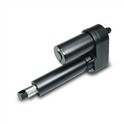
Controlling the direction of a 24V linear actuator is a crucial aspect for various applications, whether it's for a recliner chair, a solar tracker, or in a miniaturized setup. As a 24V linear actuator supplier, I've witnessed firsthand the importance of understanding how to manage these actuators' movement accurately. In this blog, I'll delve into the fundamental principles and methods to control the direction of a 24V linear actuator.
Understanding the Basics of a 24V Linear Actuator
Before we jump into the control methods, it's essential to grasp the basic working principle of a 24V linear actuator. A linear actuator is a device that converts rotational motion into linear motion. In the case of a 24V linear actuator, it operates on a 24 - volt power supply, which provides the necessary energy for its movement.
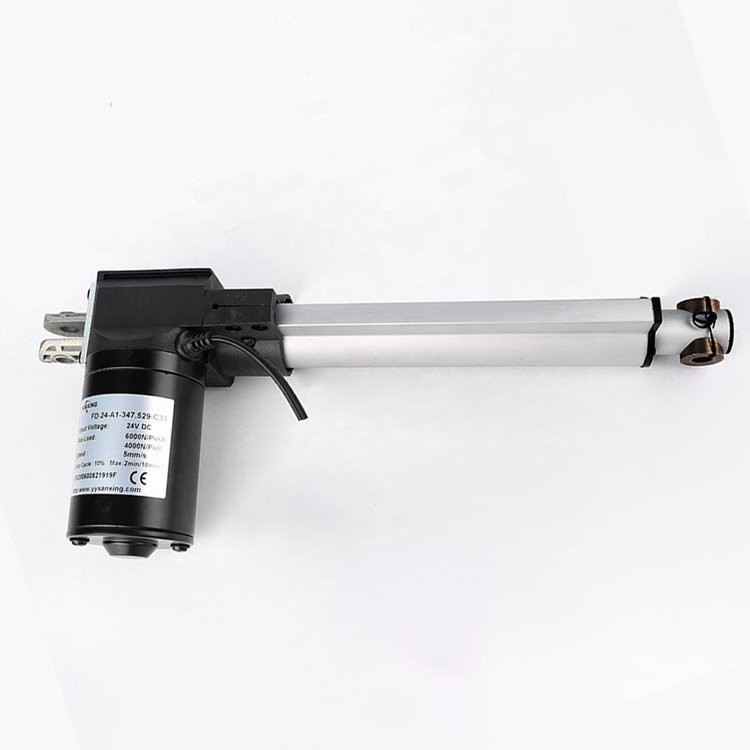
These actuators typically consist of a motor, a gearbox, and a lead screw or a belt drive mechanism. The motor rotates, and through the gearbox, this rotational motion is translated into linear movement along the actuator's shaft. The direction of this linear movement can be forward or backward, and controlling this direction is what we're interested in.
Methods for Controlling the Direction
1. Using a Relay
One of the simplest and most common ways to control the direction of a 24V linear actuator is by using a relay. A relay is an electromagnetic switch that can control high - voltage or high - current circuits with a low - voltage signal.
To control the direction of the actuator with a relay, you'll need a double - pole double - throw (DPDT) relay. This type of relay has two sets of contacts that can be switched between two different positions. When the relay is in one position, it connects the power supply to the actuator in a way that makes the actuator move in one direction. When the relay is switched to the other position, it reverses the polarity of the power supply to the actuator, causing it to move in the opposite direction.
The wiring setup for this method involves connecting the 24V power supply to the relay, and then connecting the actuator to the appropriate relay contacts. You'll also need a control signal, which can be a low - voltage (e.g., 5V or 12V) signal from a microcontroller or a switch, to trigger the relay.
2. Using a H - Bridge Circuit
A more advanced and efficient way to control the direction of a 24V linear actuator is by using an H - bridge circuit. An H - bridge is an electronic circuit that allows a voltage to be applied across a load (in this case, the linear actuator) in either direction.
The H - bridge consists of four switches (usually MOSFETs), arranged in an "H" shape. By controlling the opening and closing of these switches, you can reverse the polarity of the voltage applied to the actuator, thus changing its direction of movement.
Compared to a relay, an H - bridge has several advantages. It can switch faster, has lower power consumption, and can handle higher currents. However, it is also more complex to design and implement. There are many commercially available H - bridge integrated circuits (ICs) that simplify the process, such as the L298N or the TB6612FNG.
3. Using a Microcontroller
Microcontrollers are powerful devices that can be programmed to control the direction of a 24V linear actuator precisely. By using a microcontroller, you can implement more sophisticated control algorithms and integrate additional features, such as position feedback and speed control.
To control the actuator with a microcontroller, you can use either a relay or an H - bridge as the power - switching device. The microcontroller sends control signals to the relay or the H - bridge based on the programmed logic. For example, you can use sensors to detect the position of the actuator and use the microcontroller to stop the actuator when it reaches a certain position or to reverse its direction.
Applications and the Need for Direction Control
Recliner Chairs
The Linear Actuator for Recliner Chair is a prime example of an application where direction control is essential. In a recliner chair, the actuator is used to adjust the position of the chair, allowing the user to recline or sit upright. By controlling the direction of the actuator, the chair can be smoothly adjusted to the desired position.
Solar Trackers
In solar trackers, the Linear Actuator for Solar Tracker is used to move the solar panels to follow the sun's path throughout the day. This maximizes the amount of sunlight the panels receive, increasing the efficiency of the solar power system. Controlling the direction of the actuator allows the solar panels to move east - west or tilt up and down as needed.
Miniature Applications
Mini Linear Actuators are used in various small - scale applications, such as robotics, medical devices, and consumer electronics. In these applications, precise control of the actuator's direction is crucial for the proper functioning of the device. For example, in a small robotic arm, the actuator's direction control allows the arm to move in different directions to perform tasks.
Considerations When Controlling the Direction
Power Supply
The 24V power supply is a critical factor in controlling the direction of the actuator. Make sure the power supply can provide enough current to drive the actuator. If the power supply is not stable or does not have sufficient capacity, it can lead to erratic actuator movement or even damage the actuator.
Safety
When working with 24V power and electrical circuits, safety is of utmost importance. Always follow proper electrical safety procedures, such as wearing insulated gloves and using appropriate tools. If you're not experienced in electrical work, it's advisable to consult a professional.
Compatibility
Ensure that the control method you choose is compatible with the actuator. Some actuators may have specific requirements for the control signal or the power - switching device.

Conclusion
Controlling the direction of a 24V linear actuator is a fundamental skill for anyone working with these devices. Whether you're using a simple relay, an advanced H - bridge circuit, or a microcontroller, understanding the principles and methods is essential for achieving precise and reliable control.
As a 24V linear actuator supplier, I can provide you with high - quality actuators and offer technical support on how to control them effectively. If you're interested in purchasing our products or have any questions about actuator control, please feel free to contact us for further discussion and negotiation.
References
- "Linear Actuators: Design, Selection, and Application" by John R. DuBois
- "Electrical Engineering for Beginners" by Brian Jones