Can a lockable gas spring be used in a cleanroom environment? This is a question that often arises among industries with strict environmental requirements, such as semiconductor manufacturing, pharmaceuticals, and biotechnology. As a leading supplier of lockable gas springs, I am here to provide a comprehensive analysis of this topic.
Understanding Cleanroom Environments
Cleanrooms are specialized environments designed to control the concentration of airborne particles, temperature, humidity, and pressure. They are classified based on the number of particles per cubic meter at a specified particle size. For example, a Class 1 cleanroom allows no more than one particle larger than 0.1 micrometers per cubic meter of air. These environments are crucial for industries where even the smallest particle can cause product defects or contamination.
Characteristics of Lockable Gas Springs
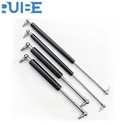
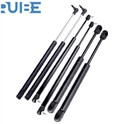
Lockable gas springs are mechanical devices that use compressed gas to provide force and can be locked in a specific position. They are commonly used in various applications, such as medical beds, salon chairs, and desks. The Gas Struts for Medical Bed are designed to support the weight of patients and allow for easy adjustment of the bed's position. Salon Chair Gas Spring provides smooth and stable movement for salon chairs, while Lockable Gas Spring for Desk enables users to adjust the height of their desks according to their needs.
Factors to Consider for Cleanroom Use
When considering using lockable gas springs in a cleanroom environment, several factors need to be taken into account:
1. Particle Generation
One of the primary concerns in a cleanroom is particle generation. Lockable gas springs can generate particles through friction, wear, and lubricant evaporation. To minimize particle generation, the gas springs should be made of materials with low particle shedding, such as stainless steel or anodized aluminum. Additionally, the internal components should be designed to reduce friction and wear, and the lubricants used should be cleanroom-compatible.
2. Sealing
Proper sealing is essential to prevent the ingress of contaminants into the cleanroom. The lockable gas springs should have high-quality seals that can withstand the pressure and temperature variations in the cleanroom environment. The seals should also be resistant to chemicals and solvents commonly used in cleanroom cleaning processes.
3. Cleanability
The gas springs should be easy to clean to maintain the cleanliness of the cleanroom. They should have smooth surfaces that can be wiped down without leaving any residue. The materials used should also be resistant to corrosion and chemical damage, ensuring that they can withstand repeated cleaning cycles.
4. Compatibility with Cleanroom Processes
The lockable gas springs should be compatible with the cleanroom processes, such as sterilization and decontamination. They should be able to withstand the high temperatures, pressures, and chemicals used in these processes without losing their functionality.
Advantages of Using Lockable Gas Springs in Cleanrooms
Despite the challenges, there are several advantages to using lockable gas springs in cleanroom environments:
1. Precise Positioning
Lockable gas springs allow for precise positioning of equipment, which is crucial in cleanroom applications where accuracy is required. For example, in semiconductor manufacturing, the ability to position wafers precisely can improve the yield and quality of the products.
2. Smooth and Quiet Operation
Lockable gas springs provide smooth and quiet operation, which is important in cleanroom environments where noise can be a distraction or a source of contamination. The smooth movement also reduces the risk of vibration-induced particle generation.
3. Durability
Lockable gas springs are designed to withstand heavy use and harsh environments. They have a long service life, which reduces the need for frequent replacement and maintenance, minimizing the disruption to cleanroom operations.
Case Studies
To illustrate the successful use of lockable gas springs in cleanroom environments, let's look at some case studies:
Case Study 1: Semiconductor Manufacturing
A semiconductor manufacturing company was looking for a solution to position their wafer handling equipment precisely in a Class 1 cleanroom. They chose our lockable gas springs, which were made of stainless steel and had low particle generation. The gas springs provided smooth and quiet operation, allowing for accurate positioning of the wafers. The company reported an improvement in product yield and quality after implementing the lockable gas springs.


Case Study 2: Pharmaceutical Manufacturing
A pharmaceutical company needed to adjust the height of their mixing tanks in a cleanroom environment. They selected our lockable gas springs, which were easy to clean and compatible with the cleanroom cleaning processes. The gas springs provided reliable and stable support, ensuring the proper mixing of the pharmaceutical products. The company was satisfied with the performance of the lockable gas springs and plans to use them in other applications in the cleanroom.
Conclusion
In conclusion, lockable gas springs can be used in cleanroom environments if they are carefully selected and designed to meet the specific requirements of the cleanroom. By considering factors such as particle generation, sealing, cleanability, and compatibility with cleanroom processes, lockable gas springs can provide precise positioning, smooth operation, and durability in cleanroom applications.
If you are interested in using lockable gas springs in your cleanroom environment, please contact us for more information. Our team of experts can help you select the right gas springs for your specific needs and provide you with technical support and guidance.
References
- ISO 14644-1:2015, Cleanrooms and associated controlled environments - Part 1: Classification of air cleanliness
- SEMI S2-0706, Safety Guidelines for Semiconductor Manufacturing Equipment
- FDA Good Manufacturing Practices (GMP) for Pharmaceuticals