Hey there! As a supplier of 12V linear actuators, I often get asked about how to make these nifty devices work in reverse. It's a common question, and today, I'm gonna break it down for you in a way that's easy to understand.
First off, let's quickly go over what a 12V linear actuator is. It's a device that converts electrical energy into linear motion. In simple terms, it moves things in a straight line. These actuators are super versatile and are used in all sorts of applications, from High Speed Linear Actuator setups to powering Linear Actuator for Recliner Chair and Linear Actuator for Electric Sofa.
Understanding the Basics of Actuator Operation
Before we dive into reversing the actuator, it's important to understand how it normally works. A 12V linear actuator typically has two wires. When you apply a 12V DC power supply to these wires, the actuator moves in one direction. The direction of movement depends on the polarity of the voltage applied. If you switch the polarity, the actuator will move in the opposite direction.
Let's say you have a basic setup where you're using a battery to power the actuator. Connect the positive terminal of the battery to one wire of the actuator and the negative terminal to the other wire. The actuator will start moving in a specific direction. Now, if you swap the connections, so the positive terminal is connected to the wire that was previously connected to the negative terminal, and vice versa, the actuator will reverse its motion.
Methods to Reverse a 12V Linear Actuator
Using a DPDT Switch
One of the simplest ways to reverse the direction of a 12V linear actuator is by using a Double Pole Double Throw (DPDT) switch. A DPDT switch allows you to easily change the polarity of the voltage applied to the actuator.
Here's how you can set it up:
- First, identify the two wires of the actuator.
- Connect the common terminals of the DPDT switch to the power source. The positive terminal of the power source goes to one common terminal, and the negative terminal goes to the other common terminal.
- Connect the remaining terminals of the switch to the actuator wires. Make sure to connect them in a way that when you flip the switch, the polarity of the voltage applied to the actuator is reversed.
When you flip the switch, the direction of the actuator's movement will change. This method is great for small - scale applications where you need to manually control the direction of the actuator.
Using a Relay
Another option is to use a relay. A relay is an electrically operated switch. You can use a double - pole relay to reverse the polarity of the voltage applied to the actuator.
Here's the setup process:
- Connect the coil of the relay to a control signal. This control signal can be from a microcontroller or a simple switch.
- Connect the power source to the common terminals of the relay contacts.
- Connect the actuator wires to the normally open (NO) and normally closed (NC) terminals of the relay.
When the relay is activated, the contacts will change their state, reversing the polarity of the voltage applied to the actuator. This method is useful when you want to control the actuator remotely or using a control system.
Using a H - Bridge Circuit
For more complex applications, especially those that require precise control, an H - bridge circuit can be used. An H - bridge is an electronic circuit that allows you to control the direction and speed of a DC motor (which is the core component of a linear actuator).
Here's a brief overview of how it works:
- An H - bridge consists of four switches (usually transistors).
- By controlling the state of these switches, you can change the direction of the current flowing through the actuator.
- You can use a microcontroller to control the switches in the H - bridge. This gives you the ability to program the actuator to move in different directions and at different speeds.
Safety Considerations
When working with 12V linear actuators, safety should always be your top priority. Here are some important safety tips:
- Power Supply: Make sure you're using a 12V DC power supply that can provide enough current to drive the actuator. Using an under - powered or over - powered supply can damage the actuator.
- Wiring: Ensure that all the connections are secure and there are no loose wires. Loose wires can cause short circuits, which can be dangerous.
- Overheating: Linear actuators can generate heat during operation. Make sure the actuator has proper ventilation to prevent overheating.
Troubleshooting Common Issues
Sometimes, you might encounter problems when trying to reverse the actuator. Here are some common issues and how to fix them:
- Actuator Not Moving: Check the power supply to make sure it's providing the correct voltage and current. Also, check the wiring connections to ensure they're secure.
- Actuator Moving Slowly or Erratically: This could be due to a low - voltage power supply or a mechanical issue with the actuator. Check the power supply and make sure there are no obstructions in the actuator's path.
- Switch Not Working: If you're using a switch to reverse the actuator and it's not working, check the switch for any damage or loose connections.
Applications of Reversible 12V Linear Actuators
Reversible 12V linear actuators have a wide range of applications. In the furniture industry, they're used in Linear Actuator for Recliner Chair and Linear Actuator for Electric Sofa to adjust the position of the chairs and sofas. They're also used in robotics for precise movement control, and in industrial automation for tasks like opening and closing valves.
Why Choose Our 12V Linear Actuators
As a supplier of 12V linear actuators, we offer high - quality products that are reliable and easy to use. Our actuators are designed to be durable and can withstand continuous use. We also provide excellent customer support, so if you have any questions about reversing the actuator or any other issues, our team is ready to help.
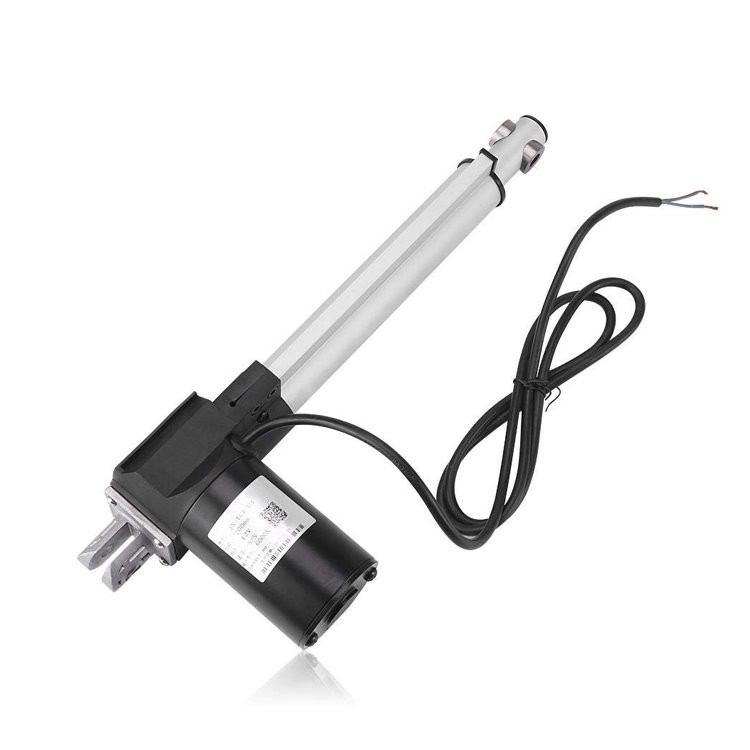

If you're in the market for a 12V linear actuator for your project, whether it's for a high - speed application or for a piece of furniture, we've got you covered. Our High Speed Linear Actuator is perfect for applications that require fast movement, while our actuators for recliners and sofas are designed to provide smooth and quiet operation.
Conclusion
Making a 12V linear actuator work in reverse is not as complicated as it might seem. Whether you're using a simple DPDT switch, a relay, or an H - bridge circuit, there are several ways to achieve this. By understanding the basics of actuator operation and following the proper setup procedures, you can easily control the direction of your actuator.
If you're interested in purchasing 12V linear actuators for your project, don't hesitate to reach out. We're here to help you find the right actuator for your needs and provide you with all the support you need to get it up and running.
References
- "Linear Actuators: Principles, Types, and Applications" - A technical guide on linear actuators.
- "Electrical Switching Circuits for DC Motors" - A resource on using switches and relays to control DC motors.