Hey there! As a supplier of Mini Linear Actuators, I often get asked about adapting these nifty devices for a vacuum environment. It's a cool topic, and I'm stoked to share some insights with you.
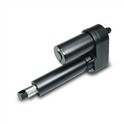
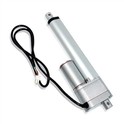
First off, let's talk about what a Mini Linear Actuator is. A Mini Linear Actuator is a compact device that can convert rotational motion into linear motion. It's super handy in a bunch of applications, from small robotics to precision machinery. But when it comes to using it in a vacuum environment, there are some unique challenges we need to tackle.
Understanding the Vacuum Environment
A vacuum environment is way different from normal atmospheric conditions. In a vacuum, there's a lack of air, which means no oxygen, no air pressure, and no moisture. This absence of air can have a big impact on how a Mini Linear Actuator works.
For starters, without air, there's no natural cooling. In a normal environment, air helps dissipate heat generated by the actuator's motor and moving parts. But in a vacuum, that heat has nowhere to go, and it can build up quickly. This can lead to overheating, which is bad news for the actuator's performance and lifespan.
Another issue is outgassing. Outgassing is when materials release gases or vapors in a vacuum. Many common materials used in actuators, like plastics, lubricants, and adhesives, can outgas. These released gases can contaminate the vacuum chamber and interfere with other equipment inside. So, we need to be careful about the materials we use in the actuator.
Material Selection
When adapting a Mini Linear Actuator for a vacuum, material selection is key. We want to choose materials that have low outgassing rates and can withstand the harsh conditions of a vacuum.


Metals are often a great choice. Stainless steel, for example, is durable, corrosion-resistant, and has a low outgassing rate. It can handle the temperature changes and mechanical stresses in a vacuum environment. Aluminum is another option. It's lightweight and has good thermal conductivity, which can help with heat dissipation.
For non-metallic parts, we need to be more selective. Some plastics, like PEEK (Polyetheretherketone), are known for their low outgassing properties and high strength. They can be used for gears, bearings, and other components. When it comes to lubricants, we can't use the regular ones we use in normal environments. Instead, we need to use vacuum-compatible lubricants that have low vapor pressures and won't outgas.
Sealing and Contamination Control
Sealing is crucial in a vacuum environment. We need to make sure that no air or contaminants can enter the actuator, and no gases from the actuator can escape into the vacuum chamber.
One way to achieve this is by using high-quality seals. O-rings made from materials like Viton or Kalrez are often used because they have good sealing properties and can withstand the vacuum conditions. These seals are placed at the interfaces between different parts of the actuator, such as the motor housing and the actuator body.
In addition to seals, we also need to pay attention to the overall design of the actuator. We want to minimize any gaps or crevices where contaminants could collect. A smooth, clean design can help prevent the buildup of debris and reduce the risk of outgassing.
Heat Management
As I mentioned earlier, heat management is a big challenge in a vacuum environment. Without air to carry away heat, we need to find other ways to keep the actuator cool.
One option is to use a heat sink. A heat sink is a device that absorbs and dissipates heat. It's usually made of a material with high thermal conductivity, like copper or aluminum. We can attach a heat sink to the motor or other heat-generating components of the actuator. The heat sink will transfer the heat away from the actuator and radiate it into the surrounding environment.
Another approach is to use a cooling system. For example, we could use a liquid cooling system where a coolant is circulated through channels in the actuator. The coolant absorbs the heat and carries it away to a radiator, where it can be dissipated. However, implementing a cooling system can be more complex and expensive, so it depends on the specific requirements of the application.
Testing and Validation
Once we've adapted the Mini Linear Actuator for a vacuum environment, we need to test and validate its performance. This involves putting the actuator through a series of tests in a vacuum chamber to make sure it meets the required specifications.
We'll test things like the actuator's stroke length, force output, speed, and accuracy. We'll also monitor the temperature of the actuator during operation to make sure it doesn't overheat. If any issues are detected during the testing, we'll need to go back and make adjustments to the design or materials.
Applications in Vacuum Environments
Mini Linear Actuators adapted for vacuum environments have a wide range of applications. In the semiconductor industry, they can be used in wafer handling systems. These systems need to move wafers precisely in a vacuum environment to ensure the quality of the semiconductor manufacturing process.
In space exploration, Mini Linear Actuators are used in satellites and other space vehicles. They can be used to adjust the position of solar panels, antennas, and other components. The ability to operate in a vacuum is essential for these applications.
Another application is in scientific research. Vacuum chambers are often used in physics and chemistry experiments, and Mini Linear Actuators can be used to move samples or equipment inside the chamber.
Related Products
If you're interested in Mini Linear Actuators, you might also be interested in our Linear Actuator for Tv Lift. This actuator is designed specifically for lifting and lowering TVs, providing a smooth and quiet operation.
We also have 12V Linear Actuator options. These actuators are powered by a 12V DC power supply, making them suitable for a variety of applications where a low-voltage power source is available.
Conclusion
Adapting a Mini Linear Actuator for a vacuum environment is a challenging but rewarding task. By carefully selecting materials, implementing proper sealing and heat management techniques, and conducting thorough testing, we can ensure that the actuator performs reliably in a vacuum.
If you're looking for a Mini Linear Actuator for your vacuum application, we're here to help. We have the expertise and experience to provide you with a high-quality, customized solution. Whether you're in the semiconductor industry, space exploration, or scientific research, we can work with you to meet your specific requirements. So, don't hesitate to reach out to us for more information and to start a procurement discussion.
References
- "Vacuum Technology Handbook" by A. Roth
- "Materials for Vacuum Applications" by R. D. Doherty